
.jpg)
Building a Mule application is only half the job. The real challenge begins when teams need to verify that the integration works reliably across every scenario it might encounter in the real world. MuleSoft projects connect systems, transform data, enforce business rules, and handle exceptions — and even small changes can create unintended behavior. Ensuring the entire flow works end to end has always required time, manual effort, and deep experience.
CurieTech AI is changing that. After simplifying how developers build Mule applications inside Anypoint Studio, Curie now introduces something even more powerful: automated, AI-driven integration testing. This brings a new level of confidence to MuleSoft teams by allowing them to validate flows, data structures, and system interactions without writing test scripts or piecing together logs from multiple tools.
Why This Matters for MuleSoft Teams
Integration testing has historically been one of the most difficult parts of the development lifecycle. Developers had to craft their own test data, manually deploy applications to CloudHub, trigger scenarios one by one, and sift through logs to understand how the integration behaved. It was slow, repetitive, and error-prone.
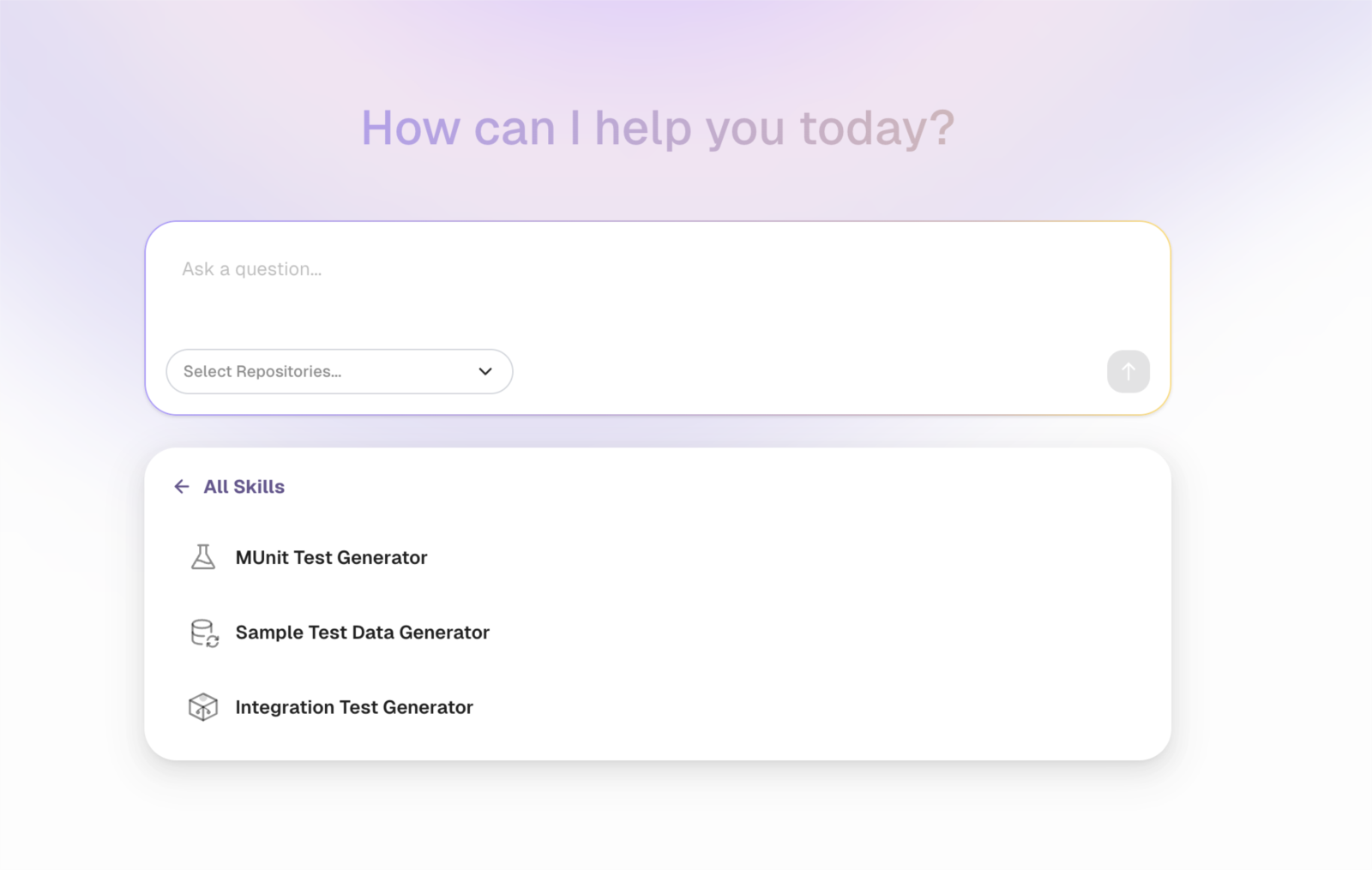
CurieTech AI introduces an approach where the testing process becomes automated, consistent, and deeply insightful. It generates realistic data, deploys the application, executes test scenarios, validates responses, explains behavior, and presents everything in a structured report. Developers get a clear view of how their integration performs, how errors are handled, and where improvements may be needed—long before anything reaches production.
This shift allows teams to ship faster and with greater confidence, reducing risk while improving reliability across every Mule flow.
How It Works?
Building or Importing the Application
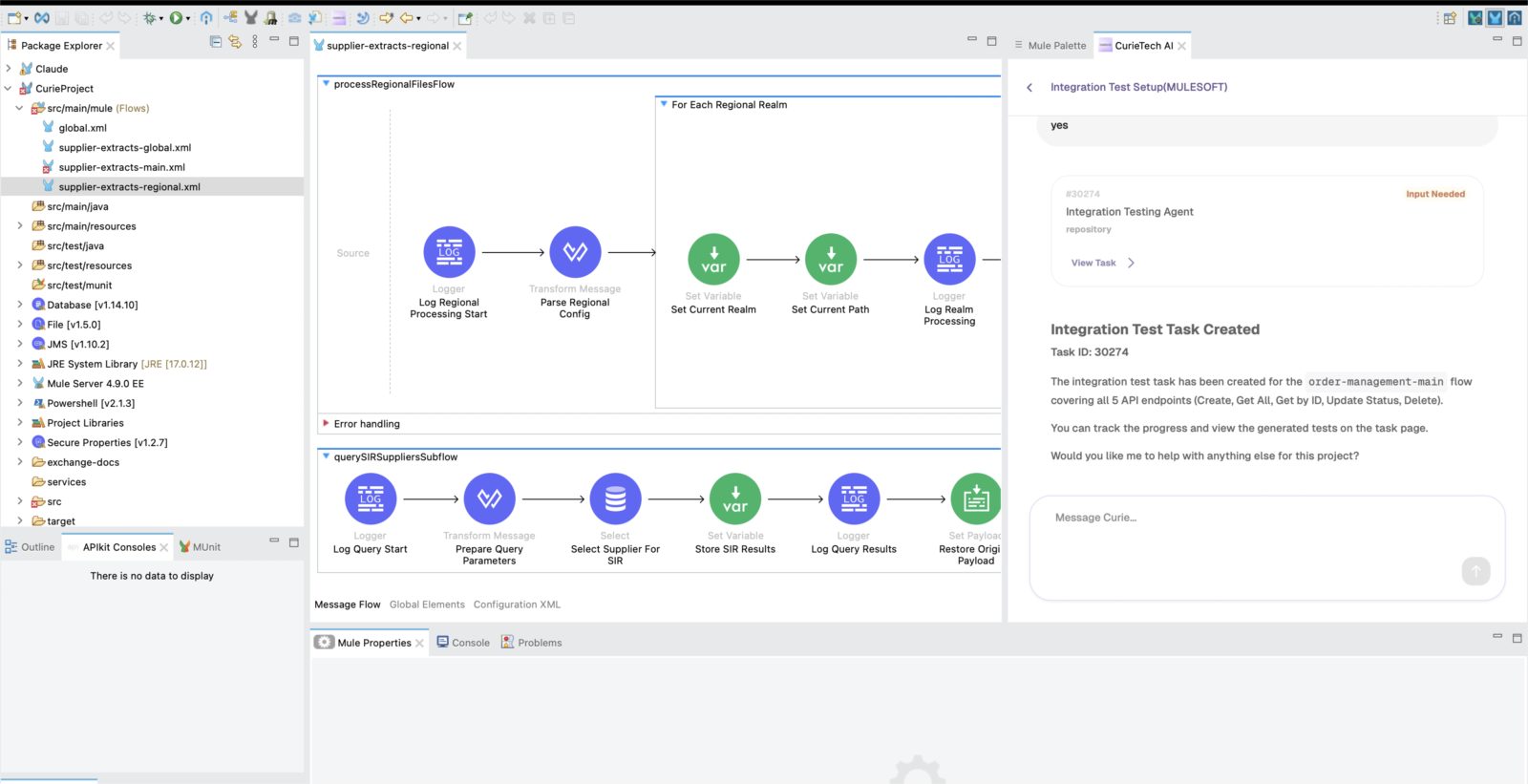
You can start with any Mule application. CurieTech AI can even generate the project for you. For example, asking Curie to build an inventory management system with CRUD operations backed by a local JSON data source results in a fully structured Mule 4 project inside Anypoint Studio. All flows, error handling, and configurations arrive ready to run.
Creating Test Data
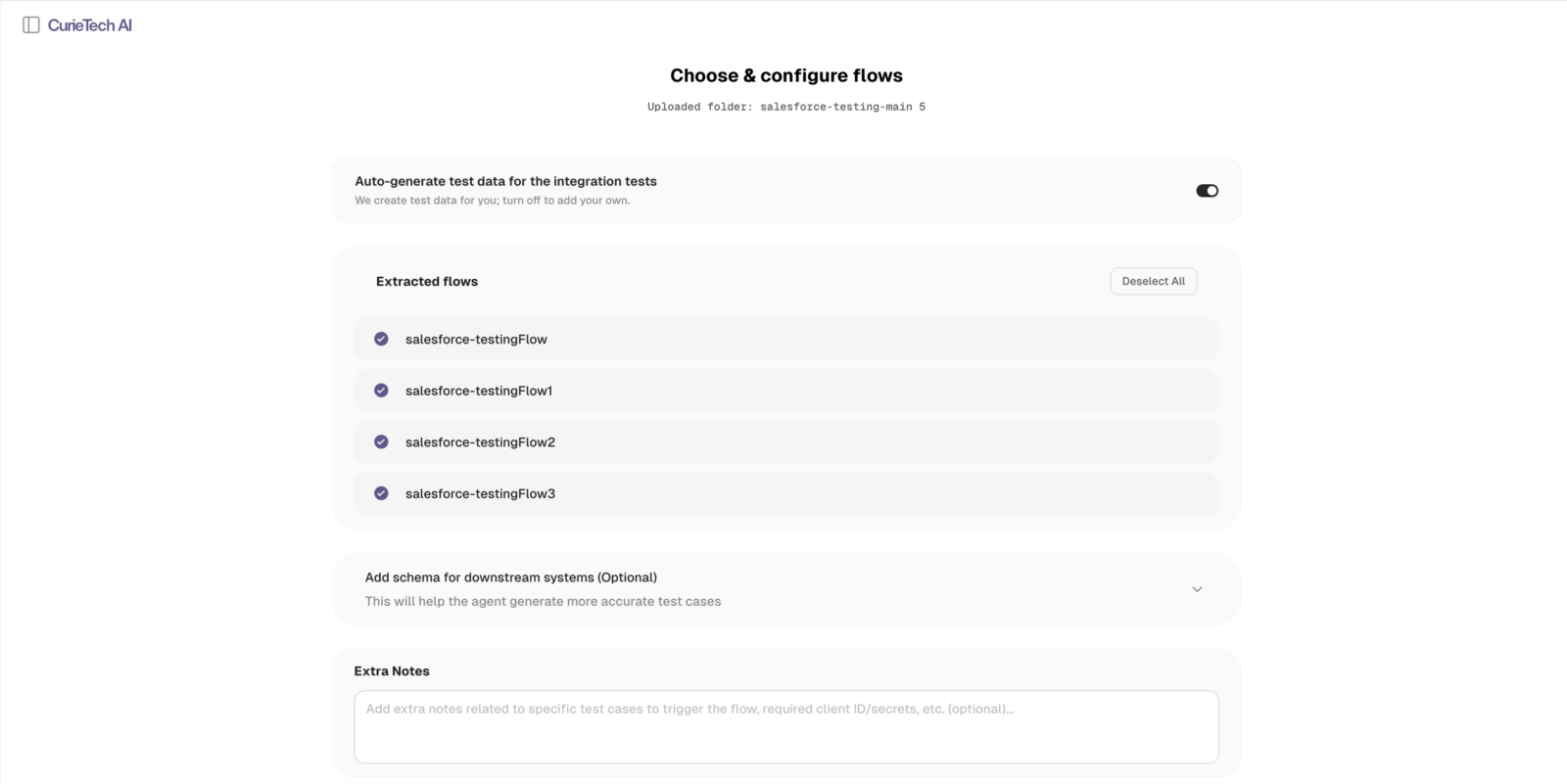
When setting up a new integration test task, Curie offers two ways to prepare test cases.
It can automatically generate realistic input and output data for each flow, perfect for rapid coverage. Or you can choose to provide your own test data. Developers can enter expected inputs and outputs for each flow, upload JSON schemas to guide data generation, and even add special notes for edge cases or unique testing requirements.

Deploying and Executing Tests
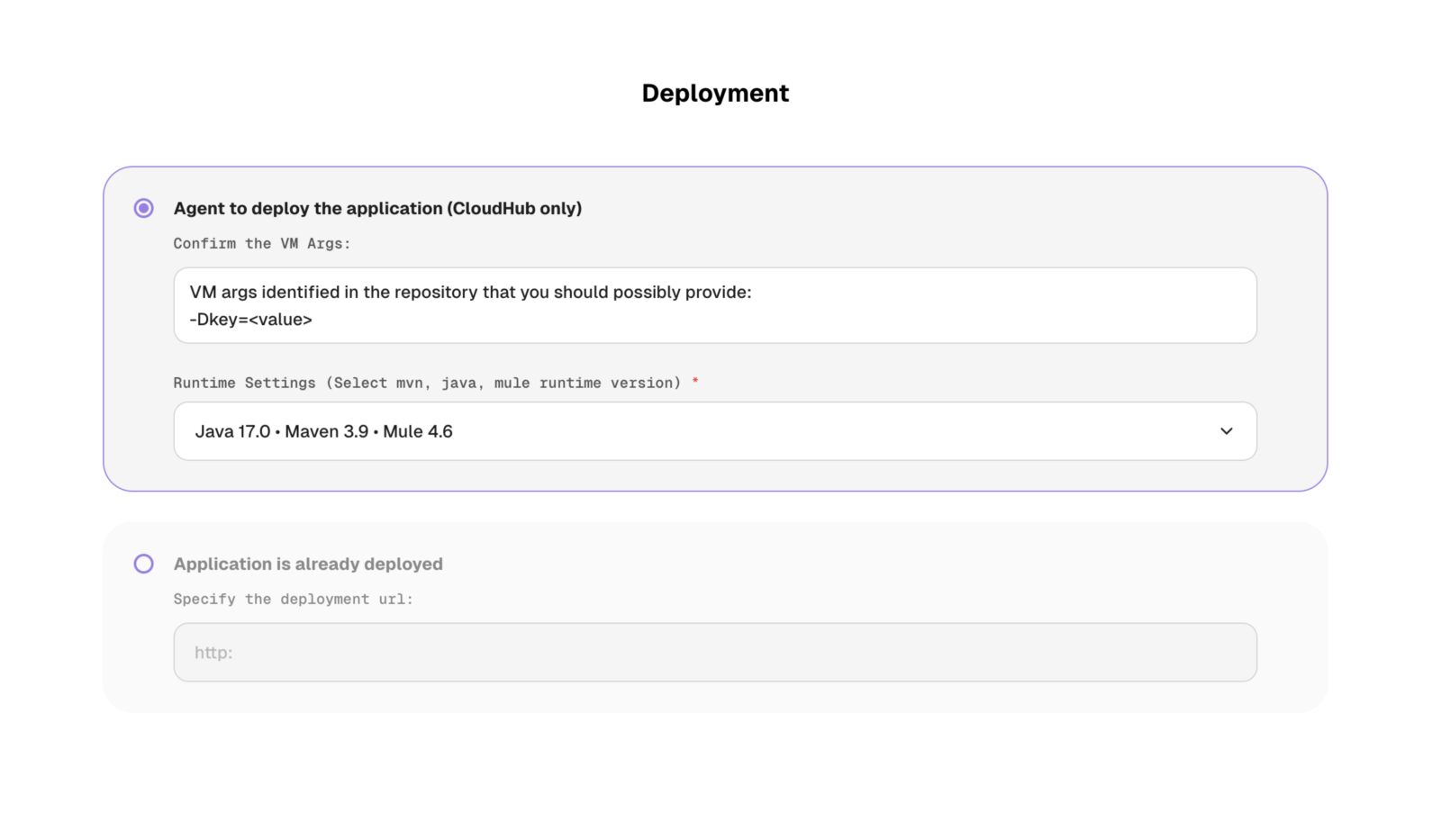
CurieTech AI gives you flexibility in how the tests are executed. You can let Curie deploy the application to CloudHub with the required runtime settings, or you can supply the public endpoint of an already deployed application. Once configured, Curie handles the execution of all test scenarios automatically.
Reviewing the Results
When the testing completes, Curie generates a detailed report for every flow. The report begins with a summary of pass and fail outcomes and provides insights into how each scenario performed. You can see expected and actual responses, status codes, logs, headers, and response times for each request.
Curie also performs structural validation, checking fields, datatypes, and error formats. The explanation section describes how the flow behaved, how errors were handled, and any observations based on CloudHub execution. Performance metrics, including cold start behavior and average latency, help teams understand the efficiency and stability of their integrations.
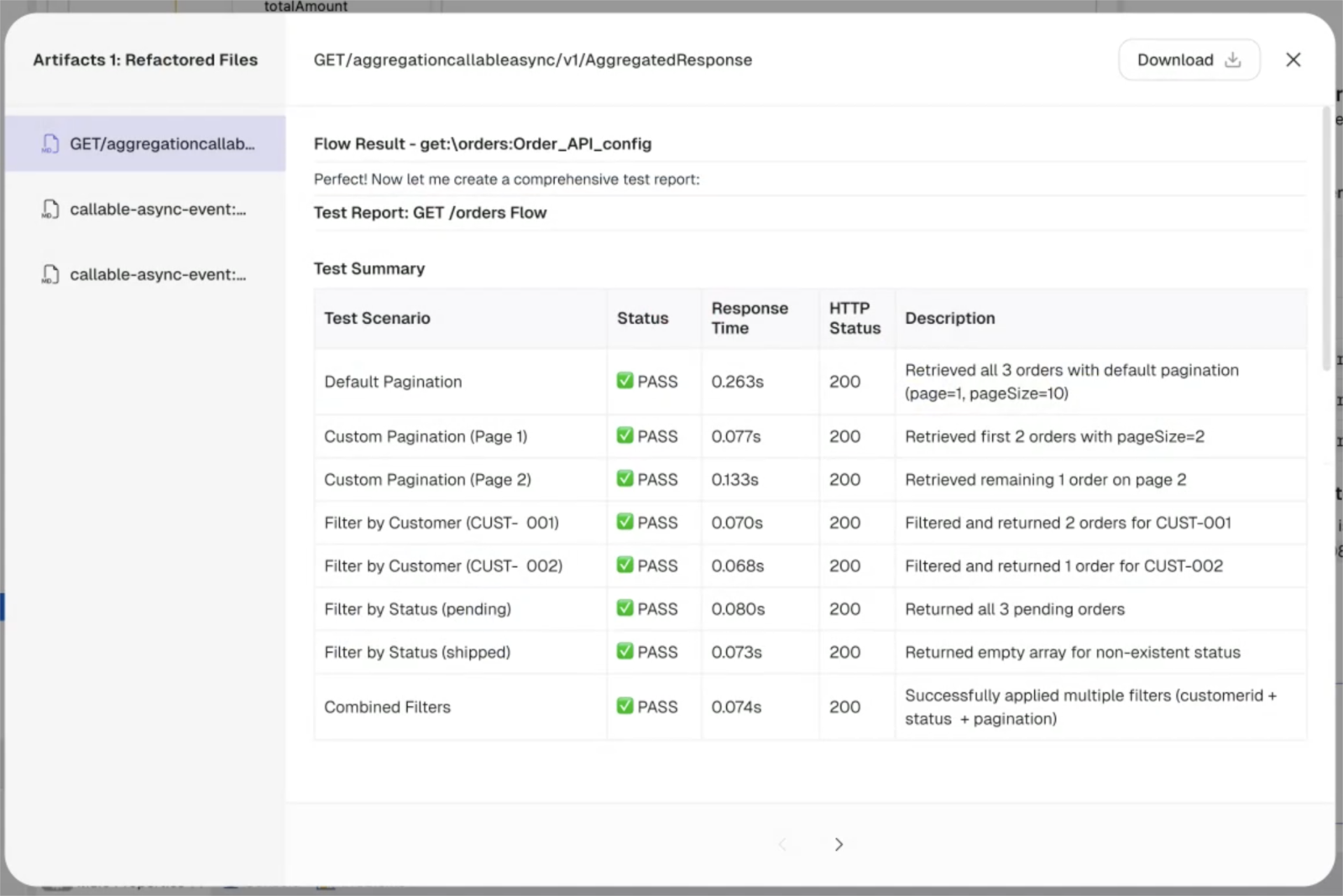
The result is an end-to-end view of your Mule application’s behavior, presented clearly and backed by real execution data. What once required several tools and hours of digging now appears in a single, cohesive report inside Studio.
A New Standard for MuleSoft Quality
CurieTech AI brings integration testing into the same environment where developers already design and build their flows. The ability to go from application creation to full integration validation with the help of AI marks an important moment for MuleSoft teams.
No more stitching together logs from CloudHub.
No more maintaining complex manual test suites.
No more guessing whether a flow works across all scenarios.
CurieTech AI ensures that integrations are thoroughly tested, well-validated, and ready for production with confidence.

.png)
.png)

