
AI Agent Development Services: A Selection Guide
Over the past two years, the vendor landscape for AI agent development has shifted faster than the underlying technology. It was once a narrow field dominated by a handful of firms with enterprise credibility and deep integration benches. It has now fragmented into three distinct provider types competing for the same budgets: global systems integrators, specialized value-added resellers, and AI agent platform providers.
The competitive edge is no longer about who can build an AI agent; most vendors now have the capabilities to do so. What separates them is how they actually deliver it: as part of a digital transformation initiative, via a professional services engagement focused on a particular application, or via a platform-centric approach. Every delivery model carries meaningfully different price points, delivery timelines, and risk levels.
This article doesn’t cover a tool, nor is it a feature comparison exercise. It’s about helping teams understand the process and components involved in implementing AI agents and deciding which delivery model aligns with their environment, budget, and timeline.
{{banner-large-5="/banners"}}
Summary of the AI agent development service provider types
What AI agent development involves
An AI agent is not a single deliverable. It is a layered system: a language model sitting on top of an orchestration layer, connected to enterprise systems through a set of tool interfaces and governed by controls that determine what the agent is permitted to do and when it needs a human in the loop. Each layer requires focused design, and the decisions made at each level have direct consequences in production.
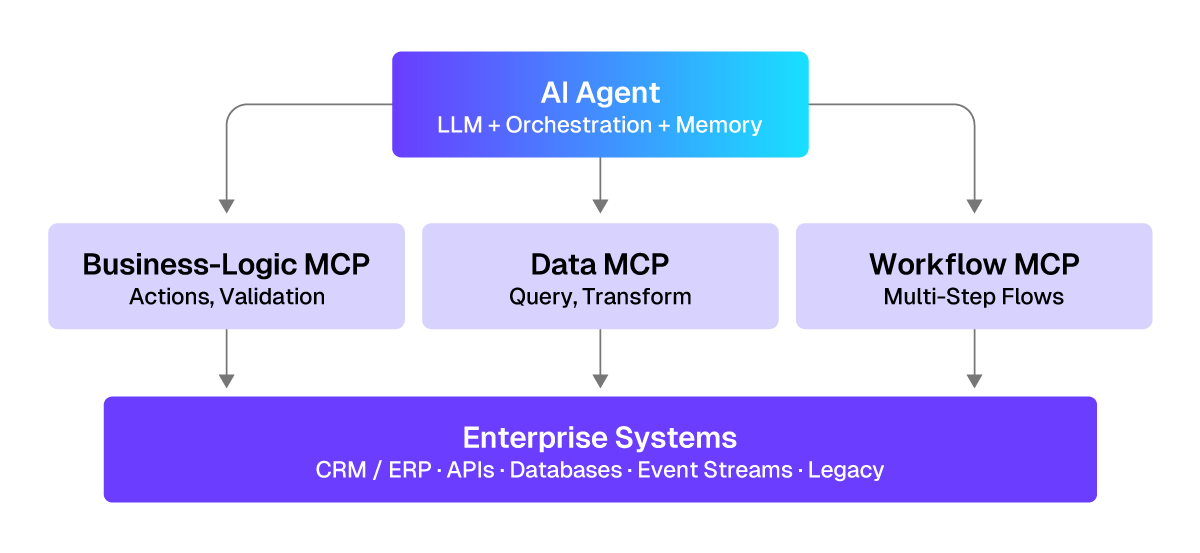
The table below summarizes the components of an agentic implementation.
Here are use cases that give a practical sense of where agents are already producing results in enterprise integration environments.
How AI accelerates delivery
One of the benefits of building AI agents today is that AI can be used throughout the delivery process. Tasks like code generation, integration development, data mapping, test creation, and documentation can be sped up with AI tools. This gives teams more time to focus on solution design, validation, and business needs rather than on repetitive work.
As a result, vendors that use AI in their delivery processes can often complete projects faster and more efficiently than those that rely only on traditional methods. For organizations seeking delivery partners, it's important to know not only how a vendor builds AI agents but also how they use AI in their delivery model.
This difference can directly affect project timelines, delivery costs, and team size. Two vendors may suggest similar solutions, but the effort needed to deliver those solutions can vary greatly based on the level of automation in their respective development processes. As AI-assisted delivery becomes more common, a vendor's ability to automate routine engineering tasks is likely to play a bigger role in terms of both costs and delivery speed.
The role of MCP servers
The Model Context Protocol (MCP) acts as the connection layer between an AI agent and the systems it interacts with. Every lookup, update, action, or workflow execution typically passes through an MCP server. As a result, the quality of the MCP layer directly affects how reliably an agent performs in production.
A common approach is to generate MCP servers directly from OpenAPI specifications, exposing individual REST endpoints as tools that the agent can invoke. While this can accelerate initial development, it often pushes integration complexity into the agent itself. Tasks such as identifier resolution, permission validation, data transformation, and multi-step process orchestration become the responsibility of the model rather than the integration layer.
In practice, this can lead to unreliable workflows, inconsistent outcomes, and unnecessary complexity. Agents end up spending time coordinating system interactions instead of focusing on decision-making and business logic. A more effective approach is to encapsulate that complexity within the MCP layer, exposing higher-level business capabilities rather than low-level API operations. This allows the agent to operate with simpler, more meaningful tools while improving reliability, maintainability, and overall system performance.
Production MCP servers do more than just wrap APIs. They encode the rules, validations, and sequencing found in enterprise integrations and present them as separate, purpose-driven actions. The agent requests what it needs using business terms. The MCP server manages everything necessary to meet that request: resolution, validation, and orchestration. This process is handled in the integration layer, taking unnecessary load off the AI agent.
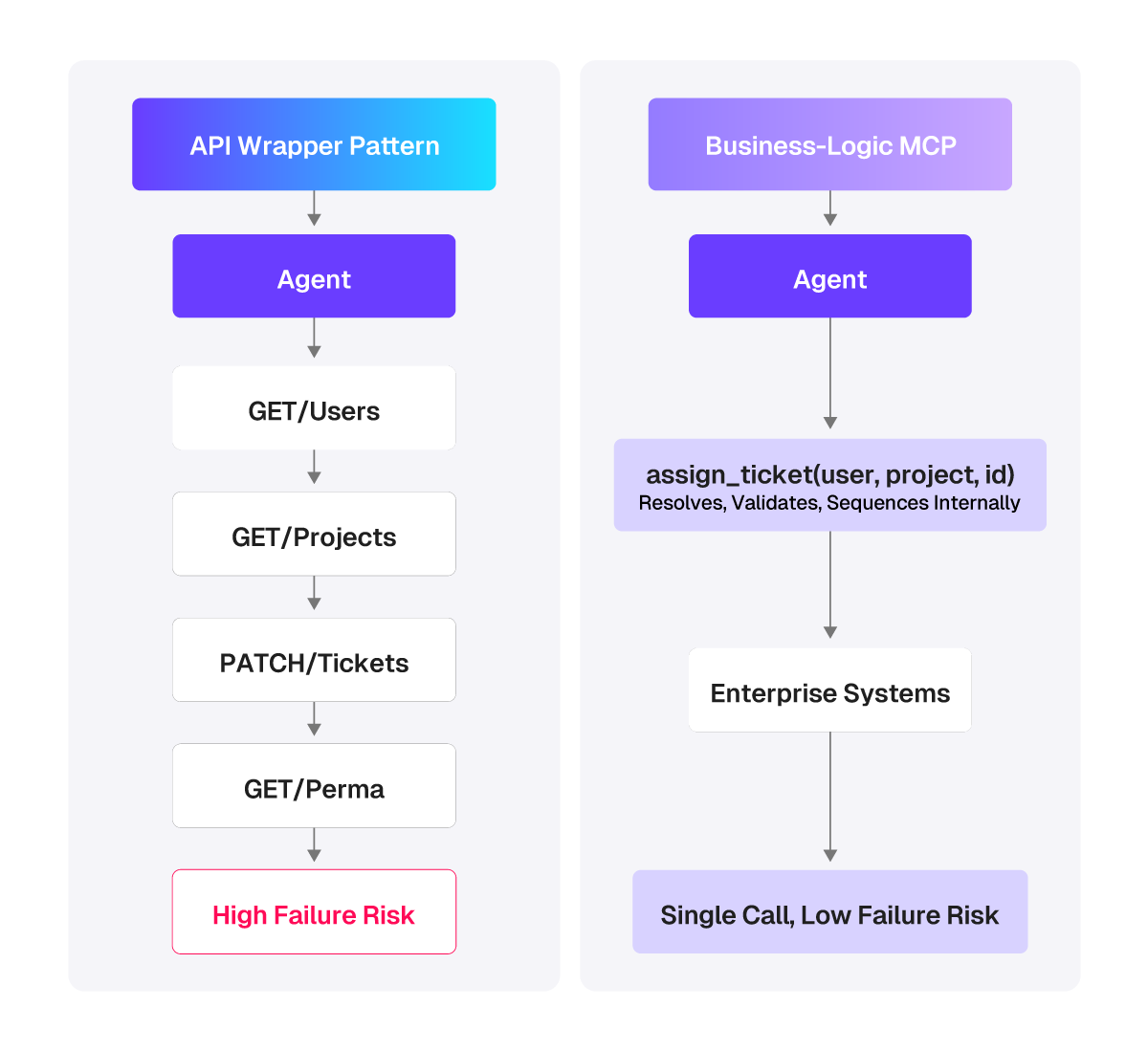
The diagram above makes the difference concrete: four dependent API calls with the agent managing state on one side and a single atomic action on the other. This is an architectural decision that determines whether an agent can run reliably and unsupervised in production.
Global systems integrators
These are the largest players in the enterprise technology services market. Firms like Accenture, Cognizant, Infosys, and Wipro have been delivering technology programs for large organizations for decades. They have built delivery operations across dozens of countries, developed proprietary methodologies, trained large workforces, and established credibility across industries such as banking, insurance, defense, healthcare, and utilities.
Their move into AI agent development has followed a familiar pattern. Some have acquired specialized AI companies to bring capability in-house quickly, while others have built practices from the ground up, often in partnership with model providers like Google, Microsoft, and AWS. Most have done both. The result is that AI agent development is now offered as part of a broader portfolio of digital transformation services, bundled with cloud migration, data platform work, and application modernization. For large clients, this is often convenient because it means fewer vendor relationships to manage and a single team that can see across the full scope of a program.
Strengths
From an integration architecture perspective, GSIs bring strengths that become increasingly important as programs grow in scale and complexity:
- Ability to operate at enterprise scale: Large integration programs rarely involve a single platform or team. They typically span multiple business units, cloud platforms, vendors, and delivery streams. GSIs have the structure and delivery capacity to coordinate these moving parts over several years while maintaining consistency in architecture, governance, and execution.
- Mature governance and compliance practices: In highly regulated industries such as banking, insurance, and healthcare, technical delivery is only one part of the challenge. Programs must also satisfy security, audit, risk, and compliance requirements. GSIs are generally experienced at working within these environments and understand the controls, documentation, and approval processes required to move solutions into production.
- Resilience during long-term delivery: Large transformation programs inevitably experience changes in scope, priorities, budgets, and personnel. One advantage of a GSI is its ability to provide continuity when key resources leave or when additional capacity is required. This reduces the risk of delivery slowing down because of individual dependencies.
- Commercial and delivery accountability: Enterprise programs need clear accountability structures. GSIs work within defined contracts, service-level commitments, and governance models that fit corporate processes. That gives stakeholders clear paths to escalate issues and clarifies ownership when problems arise.
- Cross-functional expertise: Modern integration efforts are interconnected. Integration work closely aligns with cloud platforms, data engineering, application modernization, security, and AI-driven solutions. GSIs often provide expertise in these areas, which helps with decision-making and managing dependencies across different workstreams.
Weaknesses
While GSIs offer clear advantages for large-scale programs, these benefits come with trade-offs that organizations should understand before making a long-term commitment:
- Higher delivery costs: GSI engagements often involve significant overhead beyond the delivery team. Program management, governance structures, quality assurance processes, and multiple management layers all add to the total cost. While these controls can be useful for large programs, they might be hard to justify for smaller or more focused initiatives.
- Slower decision-making and execution: GSIs aim to reduce risk and ensure consistency across large projects. In practice, this often leads to increased governance, longer approval cycles, and greater process overhead. This can be helpful for well-defined enterprise programs, but in rapidly evolving technology areas, it can hinder experimentation and delivery.
- Inconsistent access to senior talent: One common concern with large consulting organizations is the variation in experience levels across teams. The architects and specialists involved during vendor selection are not always the people who remain engaged throughout delivery. As a result, organizations should pay close attention to staffing commitments, key personnel clauses, and resource continuity plans.
- One-size-fits-most delivery models: GSIs often rely on traditional methods, reference architectures, and delivery frameworks tailored to various clients. These approaches offer consistency and predictability. However, they can restrict flexibility when a program needs more custom solutions or when architectural patterns are still changing.
- Innovation lagging behind the market: Large organizations often focus on proven technologies and consistent delivery patterns. This means that GSIs can effectively scale established solutions but might be slower to adopt new technologies, frameworks, or architectural methods. Organizations that seek to explore cutting-edge initiatives might find that specialist partners can move more quickly in these areas.
Summary of GSI strengths and weaknesses
Applications
Global systems integrators are typically the best fit for large enterprise programs where scale, governance, and coordination are as important as the technology itself. This is often the case when multiple business units are involved, delivery spans several regions, regulatory requirements are significant, and the program is expected to run over an extended period.
They perform well in situations with multiple vendors, complex stakeholder groups, and a need for strong governance across architecture, delivery, security, and operations. In these cases, the structure and capacity that a GSI provides can help lower delivery risk and ensure long-term continuity.
However, GSIs may not be the right choice for smaller or focused projects. For a proof-of-concept, a specific integration task, or a short-term delivery effort, the costs associated with a large consulting firm can outweigh the benefits. When speed, flexibility, and cost efficiency are the main priorities, a specialized partner is often a better option.
{{banner-small-3="/banners"}}
Specialized value-added resellers
Value-added resellers (VARs) occupy a different part of the services market than large system integrators. Their focus is not on broad enterprise transformation. Instead, they build deep expertise around a small number of technologies and delivery areas.
Examples include firms with strong practices in MuleSoft, Salesforce, cloud integration, or API management. Their teams spend most of their time working with the same technologies across different clients and industries. Over time, this builds a level of practical knowledge that generalist firms struggle to match.
They know which architectural patterns scale, where projects typically run into trouble, and which design decisions create long-term maintenance challenges. That experience often leads to faster delivery and fewer surprises during implementation.
Strengths
The value of a specialized VAR lies in its focus. Rather than spreading expertise across many technologies and service lines, these firms invest deeply in a small number of platforms. That specialization can translate into faster delivery, stronger technical decisions, and fewer implementation mistakes:
- Deep technical expertise: The biggest advantage of a specialized VAR is depth of knowledge. Their consultants, architects, and developers work with the same technologies every day. They understand the nuances, limitations, and operational considerations that are often missed by teams with broader but less focused experience.
- Faster time to value: Because the team already understands the technology stack, there is less time spent learning the environment or validating common design decisions. They can usually become productive much faster than a generalist consulting firm.
- Greater flexibility: VARs are typically more agile than larger consulting organizations. Team structures are smaller, decision-making is faster, and changes in scope or priorities can often be accommodated without significant process overhead.
- Balanced cost model: While specialist expertise comes at a premium, VARs generally operate with lower overhead than large system integrators. For many organizations, this creates a better balance between cost and technical capability.
- Proven implementation patterns: Having delivered similar projects repeatedly, VARs typically have reusable frameworks, accelerators, and reference architectures that can reduce implementation effort and delivery risk.
Specialists tend to provide recommendations based on real-world implementation experience rather than theoretical best practices. This can be particularly valuable when dealing with platform limitations or operational challenges.
Weaknesses
The same focus that makes a VAR effective in certain situations can make it a less ideal choice in others. Organizations should understand where specialization adds value and where broader capabilities may be required. Here are some specific issues to consider:
- Limited breadth: The same specialization that makes a VAR valuable can also limit its effectiveness. They are often strongest within a specific technology domain and may not have the depth required across adjacent areas such as cloud infrastructure, data engineering, security, or large-scale transformation programs.
- Dependency on a specific technology stack: Many VARs build their businesses around a small number of technologies. If an organization's strategy changes or a major platform is replaced, the value of that relationship may decrease significantly.
- Variable scale and capacity: Not all VARs operate at the same scale or level of capacity. Some can support large, multi-region programs, while others are boutique firms with relatively small delivery teams. Capacity, geographic coverage, and succession planning should all be evaluated during vendor selection.
- Business continuity risk: Compared to large systems integrators, specialist firms are generally more exposed to market changes, acquisitions, and demand fluctuations. Clients should consider the long-term stability of the partner when entering strategic relationships.
- Less experience with enterprise governance: Some VARs excel technically but lack experience operating within complex enterprise governance models that involve architecture review boards, regulatory audits, procurement controls, and large-scale PMOs.
- Limited incentive to maximize automation savings: Most VARs operate primarily on a services-based business model, where revenue is closely tied to the effort required to deliver a project. While many firms are increasingly adopting AI and automation tools internally, the resulting productivity gains do not always translate directly into lower project costs for the client. In some cases, automation improves delivery margins rather than reducing overall fees.
Clients should evaluate vendors based on outcomes, delivery timelines, and commercial models rather than assuming that increased automation will automatically result in lower costs.
Summary of VAR strengths and weaknesses
Applications
Specialized VARs are often the best choice when the technology stack has already been selected and the primary requirement is strong implementation expertise. They work particularly well for integration programs, platform modernization initiatives, and API-led transformation efforts where success depends on making the right technical decisions from the start. They are also a good fit for organizations that lack deep in-house expertise and want a partner that can provide practical guidance and delivery capability.
VARs are generally less suited to large-scale enterprise transformation programs spanning multiple technologies, business units, and governance functions. In those situations, broader delivery and program management capabilities may become more important than technical specialization alone.
AI agent platform providers
AI agent platform providers are the newest category in this market, and they represent a genuinely different model. They are not consulting firms that happen to use AI tools; they are technology companies that have built proprietary platforms for AI agent development and use them as the primary mechanism for delivering client engagements. The delivery model is built around automation, with the goal of reducing implementation effort, shortening delivery timelines, and lowering project costs. CurieTech, discussed later in this article, is an example firm using this model.
What distinguishes these vendors is the source of their value. A GSI's value lies in its people, processes, and organizational capacity. A VAR's value is in its platform knowledge and its partner relationships. A platform provider's value lies in its technology. The platform itself does work that would otherwise require manual effort from large teams. Integration code gets generated rather than written by hand. Test cases are automatically generated from interface specifications. Documentation gets produced as a byproduct of the build process rather than as a separate task at the end.
Strengths
The primary advantage of AI agent platform providers is efficiency. Their platforms are designed to automate repetitive delivery activities, allowing teams to focus more on business requirements and less on implementation mechanics. This provides numerous benefits:
- Faster delivery: Automation can significantly reduce effort across development, testing, documentation, and deployment activities. This allows teams to spend more time refining business requirements and less time on repetitive delivery tasks. Shorter delivery cycles can reduce project risk and accelerate adoption for organizations under pressure to demonstrate value quickly.
- Lower implementation costs: Automating repetitive tasks reduces the manual effort required to build and maintain solutions. While specialist knowledge is still important, organizations can often achieve similar results with smaller teams and fewer delivery hours. This can reduce project costs, especially for initiatives involving multiple agents or integrations.
- Consistency across projects: Platforms support standardized development practices, testing methods, deployment processes, and operational controls. This consistency helps minimize implementation variability and makes solutions easier to support over time. It can also simplify governance for organizations handling multiple AI projects.
- Multi-platform integration: Most enterprise environments mix cloud applications, SaaS platforms, databases, APIs, and legacy systems. AI agent platforms usually operate across these technology boundaries, reducing the effort required to connect systems and coordinate end-to-end business processes.
- Built-in accelerators: Many platforms come with reusable connectors, templates, testing frameworks, deployment pipelines, and monitoring tools. These accelerators lower implementation effort and let teams concentrate on business functionality.
- Scalability through automation: As the number of agents grows, automation becomes more valuable. Tasks like testing, deployment, monitoring, and documentation can be managed more effectively than with traditional delivery methods.
- Operational visibility: Centralized visibility into agent activity, integrations, exceptions, and performance helps operational teams better understand how solutions are performing in production. This can enhance troubleshooting, support response times, and overall operational reliability, especially in settings where multiple agents interact with critical business systems.
Weaknesses
The advantages of automation come with trade-offs. Organizations should understand where the platform adds value and where its limitations may become apparent:
- Vendor dependency: The delivery model is closely tied to the provider's platform. Over time, organizations may become dependent on platform-specific tooling, capabilities, and operational processes. Unlike traditional consulting engagements that rely primarily on standard technologies, the long-term success of the solution is more closely tied to the vendor's platform and roadmap.
- Platform limitations become project limitations: Every platform has boundaries, regardless of how capable it is. Most AI agent platforms are optimized for common integration, orchestration, and automation patterns. Challenges arise when a project needs specialized business logic, unique integration requirements, or functions that the platform isn't designed for. In these cases, teams might have to do custom development, find workarounds, or redesign parts of the solution. Although this doesn’t always delay delivery, it can decrease the efficiency benefits that initially made the platform appealing.
- Maturity and longevity concerns: Many AI agent platform providers are newer organizations compared to established consulting firms and software vendors. Buyers should carefully evaluate product maturity, long-term viability, and support capabilities.
- Proprietary tooling considerations: Organizations should understand how much of the delivered solution relies on proprietary capabilities. This becomes particularly important when considering future maintenance, migration, or vendor transitions.
- Procurement and risk concerns: Some enterprise procurement and risk teams are naturally more comfortable working with established vendors. Newer platform providers may face additional scrutiny around security, compliance, financial stability, and support models.
Summary of AI agent platform strengths and weaknesses
Applications
AI agent platform providers are often the best choice when speed, efficiency, and quick delivery are the main goals. They work well for organizations that want to build and launch AI agents swiftly, especially when the scope is clear and integration with multiple systems is important. These platforms are also a good fit for companies aiming to speed up delivery without the costs and overhead of large consulting projects. This model is particularly fit for mid-sized organizations, innovation teams, and enterprise departments running focused initiatives that need measurable business results quickly.
However, they are generally not suitable for projects that rely heavily on managing organizational change, navigating complex regulations, transforming large operating models, or addressing enterprise-wide governance activities, where technology delivery is just one part of a larger challenge. In these cases, the broader capabilities offered by GSIs or other consulting partners may outweigh the platform's speed and efficiency benefits.
CurieTech: An example of the platform provider model in practice
CurieTech is an example of how the AI agent platform provider model works in a real delivery context. Rather than staffing a large team of consultants to build integrations and agent logic by hand, CurieTech uses its own platform to automate the most time-consuming parts of the build: integration code generation, test suite creation, and documentation output. The result is a shorter delivery timeline and lower overall cost than a traditional implementation approach.
The following example illustrates how CurieTech analyzes an existing API implementation and generates an MCP server.
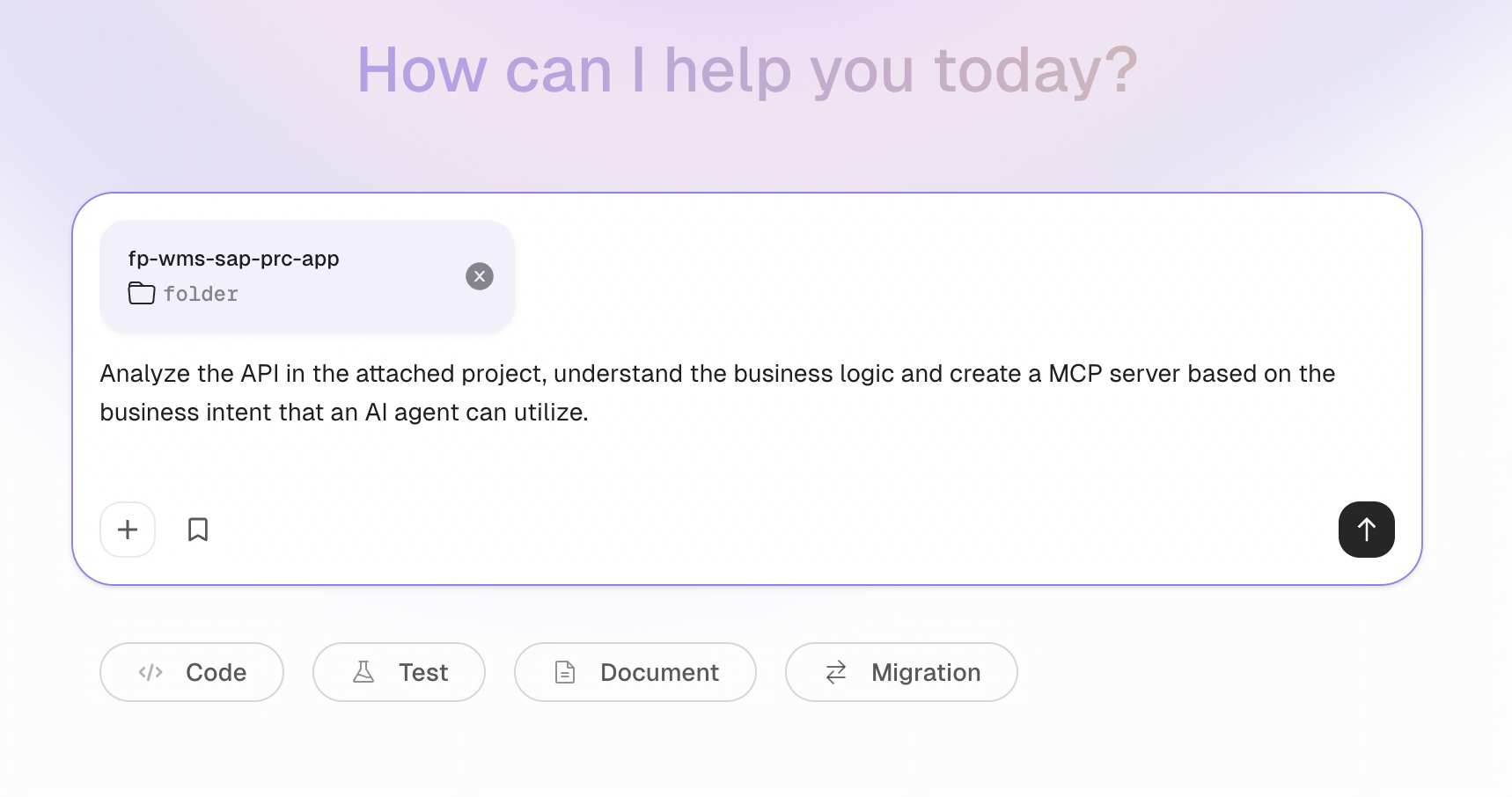
This example shows how CurieTech can examine an existing API project. It understands the business processes and domain logic, then automatically generates an MCP server. Instead of just mapping endpoints 1:1, the agent determines the business intent behind the APIs. It creates tools that agents can easily understand and use, which speeds up the transition from traditional integrations to agent-ready features, reducing manual work while improving accuracy and usability.
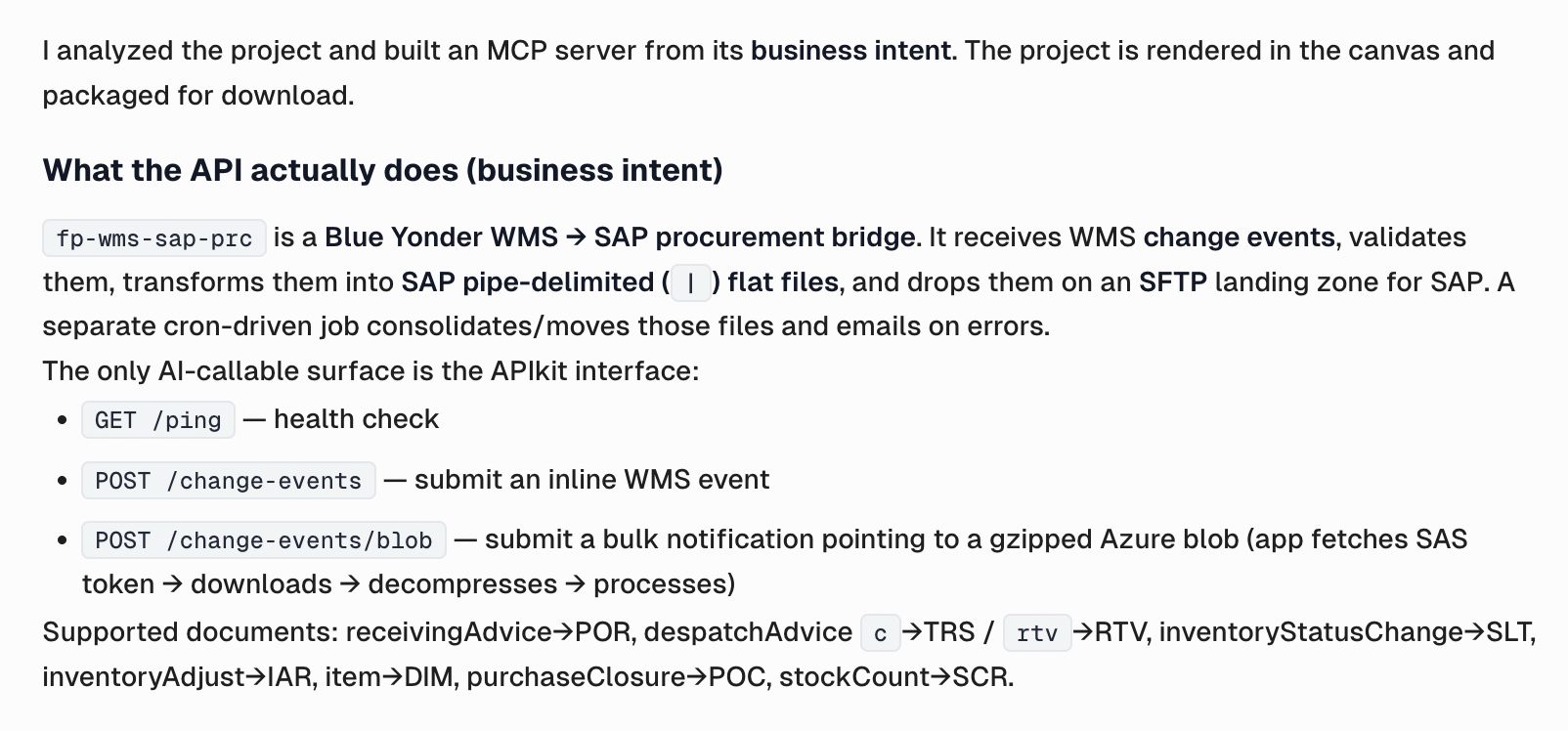
After analyzing the API implementation and underlying business workflows, CurieTech generated an MCP server that exposes business-oriented tools instead of simply mirroring REST endpoints. The resulting toolset is organized around meaningful operational tasks, such as submitting warehouse change events, validating transactions, and retrieving business reference data, making it significantly easier for AI agents to understand, reason about, and execute warehouse management processes.
This intent-first approach reduces complexity, improves agent usability, and creates a more natural interface between enterprise systems and AI applications.
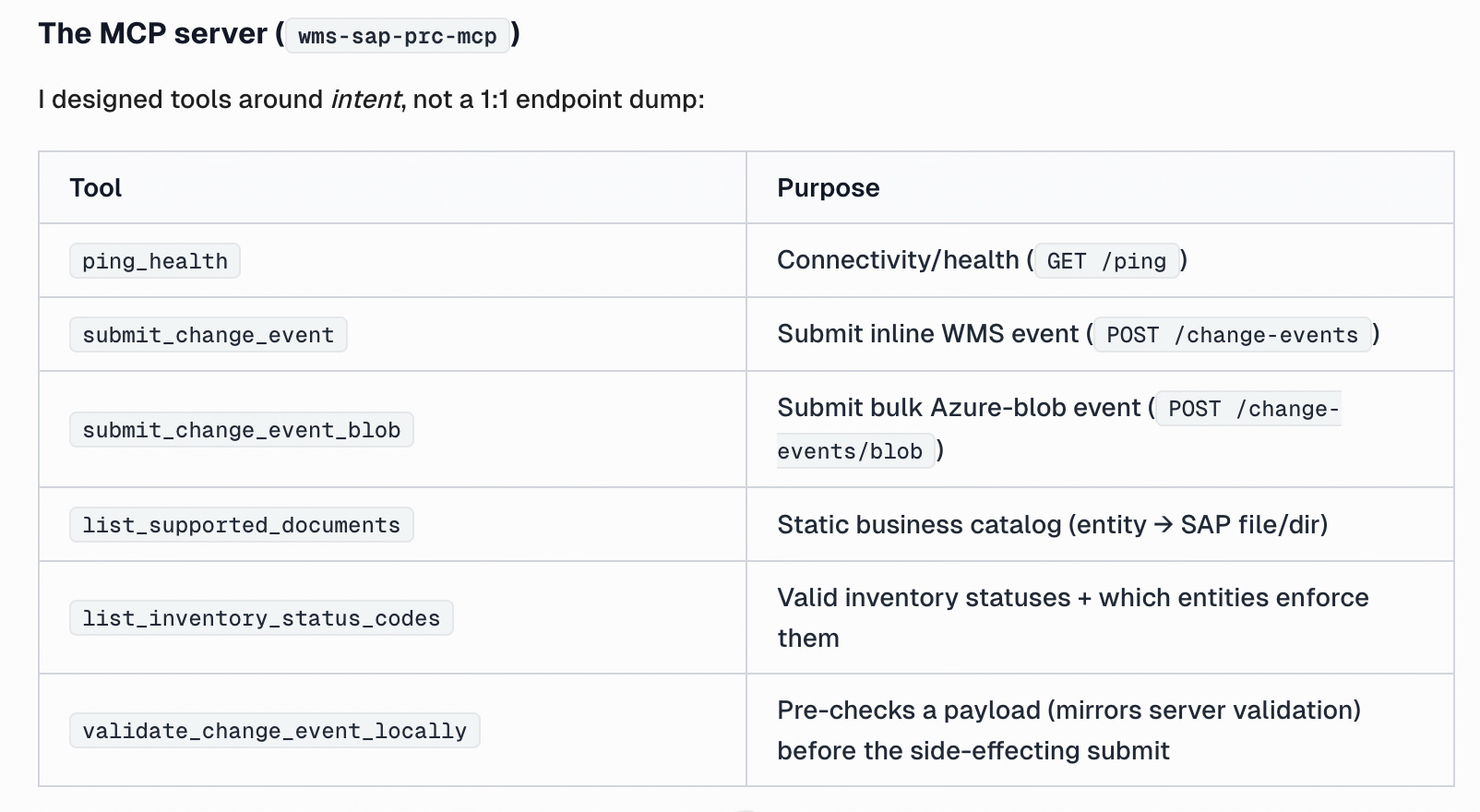
The generated code includes well-documented tools, business context, validation logic, configuration management, and supporting client libraries for interacting with the underlying system. By embedding the discovered business intent directly into the codebase, the resulting MCP server is immediately usable, maintainable, and understandable by both developers and AI agents, significantly accelerating the path from existing integrations to agent-ready services.
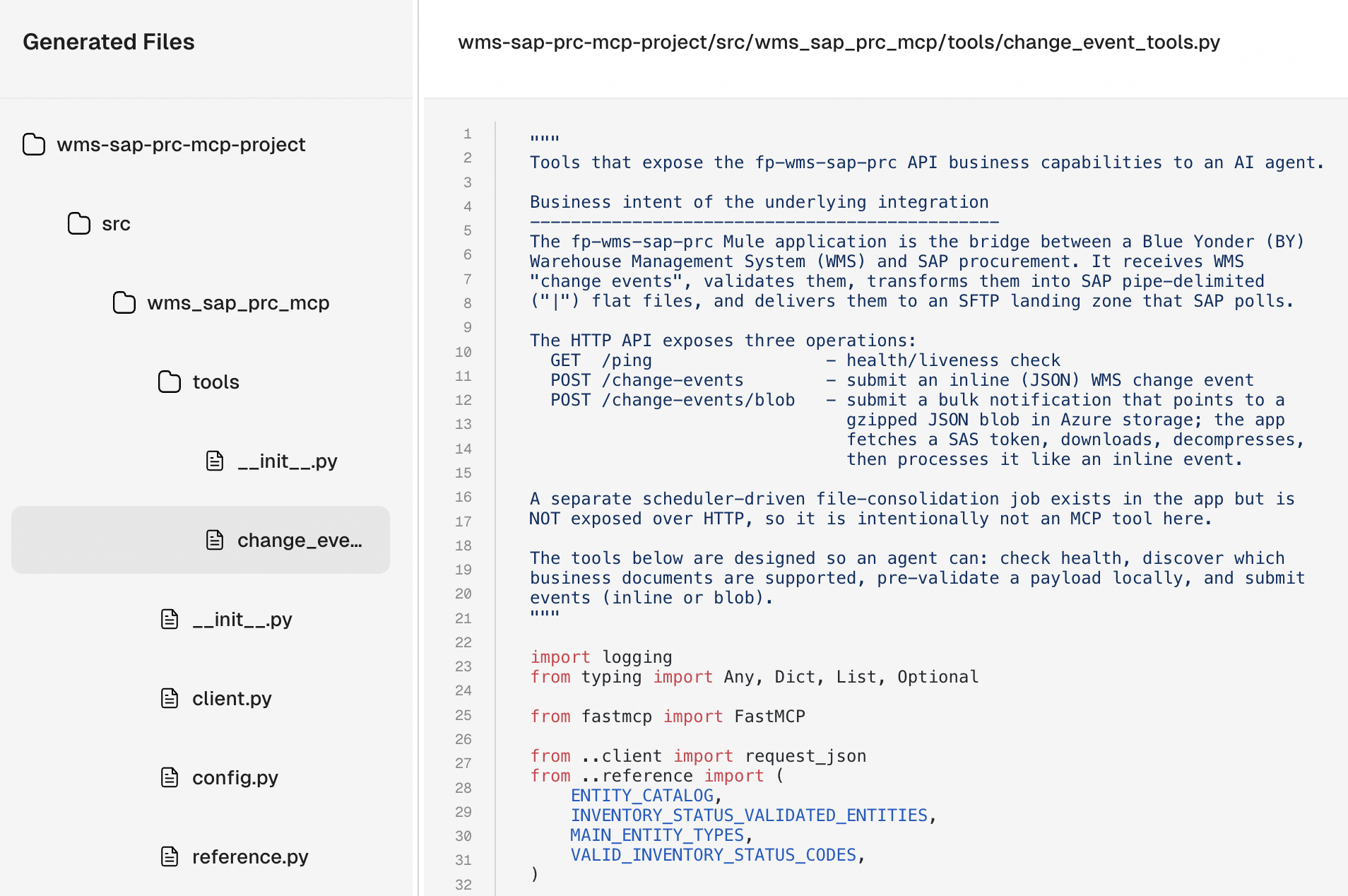
This example illustrates the main benefit of the platform-provider model. Rather than depending on big implementation teams to manually analyze APIs, create abstractions, write code, and produce documentation, CurieTech handles these tasks through its platform. This leads to a quicker route from existing enterprise assets to AI-ready capabilities. It allows organizations to roll out agent-enabled solutions faster, more consistently, and at a lower cost. As AI adoption accelerates, this platform-focused approach could dramatically change how integration and automation projects are carried out.
{{banner-small-3="/banners"}}
Conclusion
The choice of an AI agent vendor is not mainly a technology decision. It is about how the delivery model works. The three categories discussed here can all create effective agents. What sets them apart is their operations, costs, timelines, and added value beyond technical delivery.
Global systems integrators are built for scale and complexity, making them the right choice for large enterprises running multi-year programs in regulated industries, but they often have too much overhead for anything smaller. Specialized VARs are built for depth in a defined domain, delivering the most value when platform expertise is the key success factor. AI agent platform providers are designed to reduce implementation effort through automation, which can shorten delivery timelines and improve project economics when compared to traditional delivery approaches.
In practice, these models can work together. A GSI may oversee the overall program while a platform provider delivers specific work faster. A VAR may handle platform-specific tasks, while a platform provider manages the orchestration layer. What remains unchanged is the need to clearly understand the project requirements before starting the vendor selection process.